
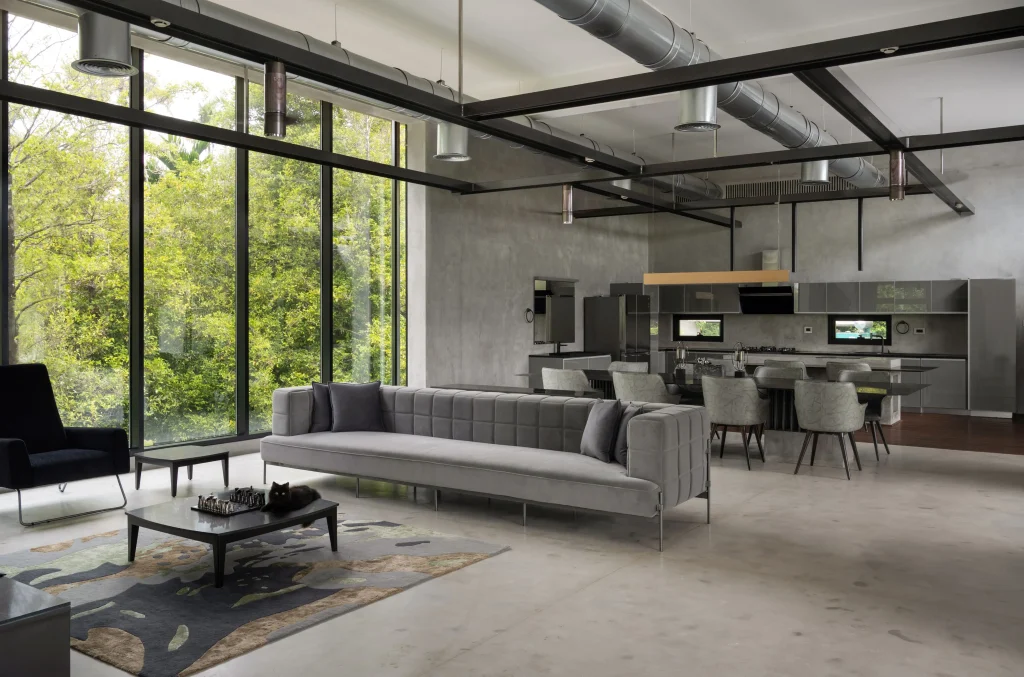
The living room is the emotional centre of the house, the one space we all cross daily and where guests form that vital first impression. Unlike a bedroom or a kitchen, this room is asked to wear many hats. It is a refuge after a long workday, a lively stage for hosting friends, a cosy cinema for family movie nights, and a peaceful corner for curling up with a good book. Thoughtful design here goes far beyond aesthetics; it defines how welcoming and comforting your daily life feels. A poorly planned room can feel chaotic or cramped, but a considered one does the exact opposite. It elevates your everyday routines, fosters connection with the people you love, and provides a restorative retreat that actively supports your mental wellbeing.
The Essential Elements of a Living Room
Every well-designed living room is built around a few foundational elements that work together to create a space that feels balanced, comfortable and cohesive.
- A clear focal point: A media wall, a large window with a view, a fireplace, or a striking piece of art that anchors the room and gives the eye somewhere to rest.
- A well-planned seating layout: Sofas and chairs arranged to encourage conversation, with enough breathing room for people to move comfortably.
- Balanced lighting: A layered mix of ambient, task, and accent lighting rather than a single overhead source.
- An anchoring rug: One that’s large enough to unify the seating group rather than float awkwardly beneath just the coffee table.
- Adequate storage: Built-ins, media consoles, or ottomans with hidden storage to keep the space visually calm.
- A cohesive palette: Colours and materials that tie the walls, furniture, and soft furnishings into one unified story.
Lighting, Artwork, Plants, Textiles and Accessories in a Living Room
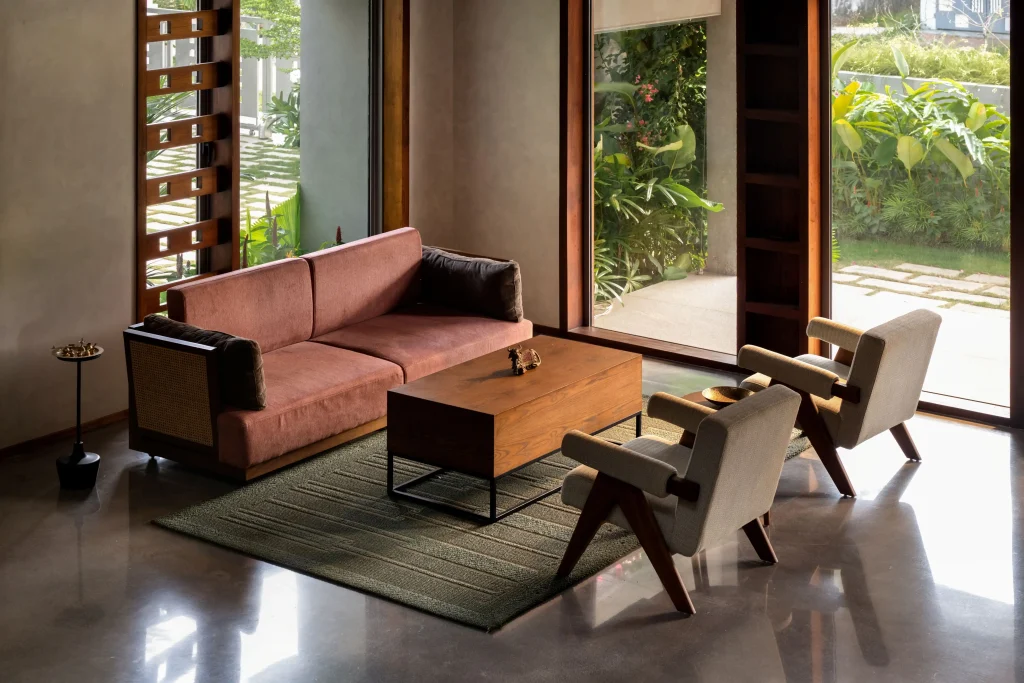
If the foundational elements are the bones of the room, the décor is its soul. Lighting, artwork, plants, textiles and accessories work together to shape the mood, add personality and make the space feel lived-in.
- Lighting: Sets the entire mood of the room. Warm, layered lighting, a mix of floor lamps, table lamps and dimmable overheads, can make a space feel cosy in the evening, while brighter, cooler light supports daytime activity.
- Artwork: Injects personality and can become a powerful focal point, guiding colour choices for the rest of the room while reflecting the homeowner’s taste and story.
- Plants: Bring a sense of life and softness to what might otherwise be a hard-edged space, while also improving air quality and adding a natural, grounding element.
- Textiles: Cushions, throws, curtains and upholstery introduce texture and comfort, softening hard surfaces like wood floors and making the room feel inviting rather than showroom-stiff.
- Accessories: Books, trays, vases and decorative objects are the final layer that ties the colour scheme together and adds those personal touches that make a house feel like a home.
Guiding Principles for a Harmonious Living Room
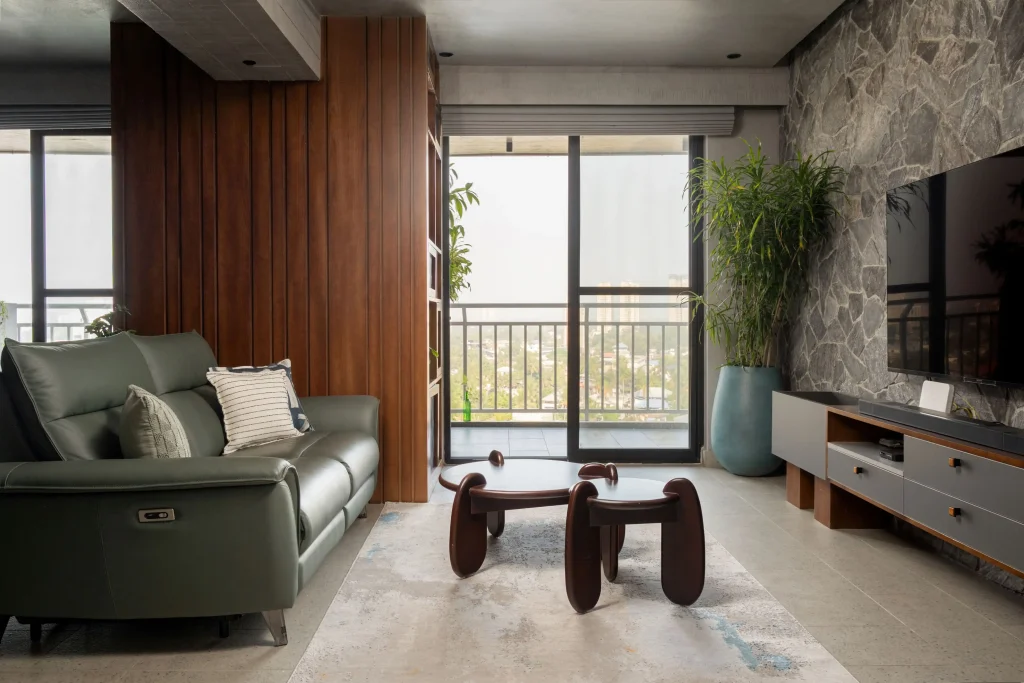
The most comfortable rooms tend to share a few strategies. Start by zoning the space based on how you live. Even in an open-plan layout, a conversation circle, a media corner, and a reading nook each deserve their own footprint, defined by rugs and furniture placement.
To keep your colours balanced and effortless, lean on the 60-30-10 rule: allow 60 per cent of the room to carry your dominant colour, such as walls and large furniture; 30 per cent for a secondary shade, such as curtains and accent chairs; and the final 10 per cent for lively pops of colour in your cushions and accessories. Mix textures deliberately, pairing the warmth of wood with sleek metal, glass, and inviting fabrics so the room never feels flat or one-dimensional. Pay close attention to scale and proportion. Oversized pieces will suffocate a small room, while delicate, undersized furniture will leave a large room feeling cold and empty. And remember to layer your light at different heights, combining various sources rather than relying on a solitary ceiling fixture that washes out the room’s depth.
Designing for the Seasons of Life
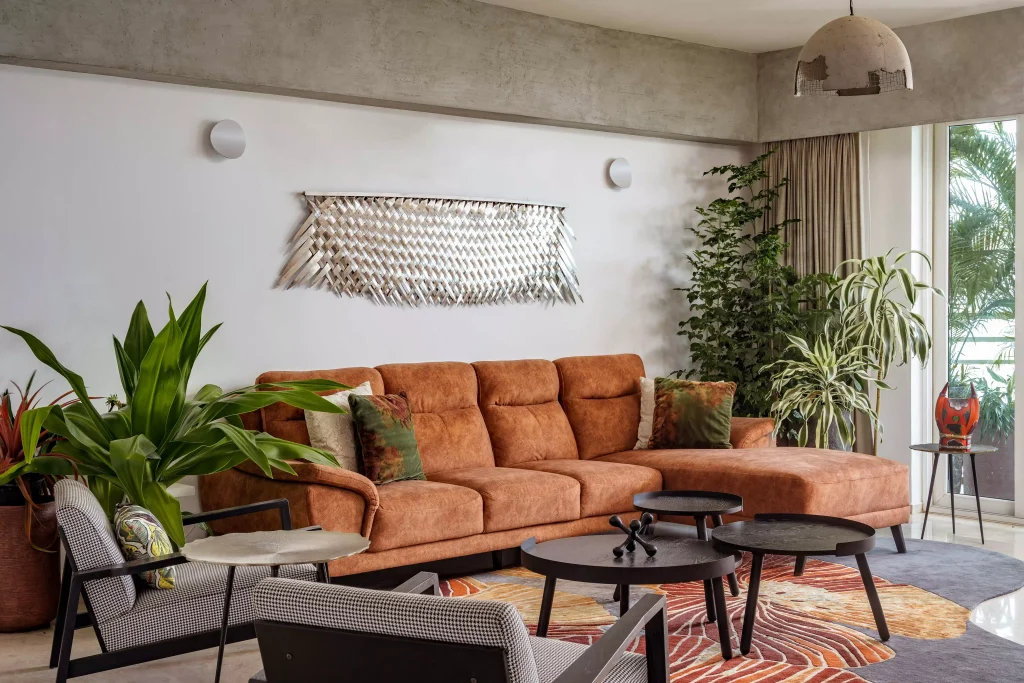
Families grow, routines shift, and a great room evolves right alongside you. Children get older, working from home becomes the norm, and the way we socialise changes. Designing with flexibility in mind pays dividends over the years.
Look for pieces that adapt to the moment: a modular sofa that can be reconfigured as your household changes, nesting or extendable tables that materialise when guests arrive and tuck away when it is just you, and storage ottomans that seamlessly double as extra seating. By thinking in fluid, flexible zones rather than one rigid, permanent arrangement, your room can shift its mood instantly. A family evening can transform into a bustling night of entertaining simply by angling a sofa or moving a few adaptable pieces. No expensive redesign is required, just a space that grows alongside the people living in it.
Choosing Pieces You Will Love Living With
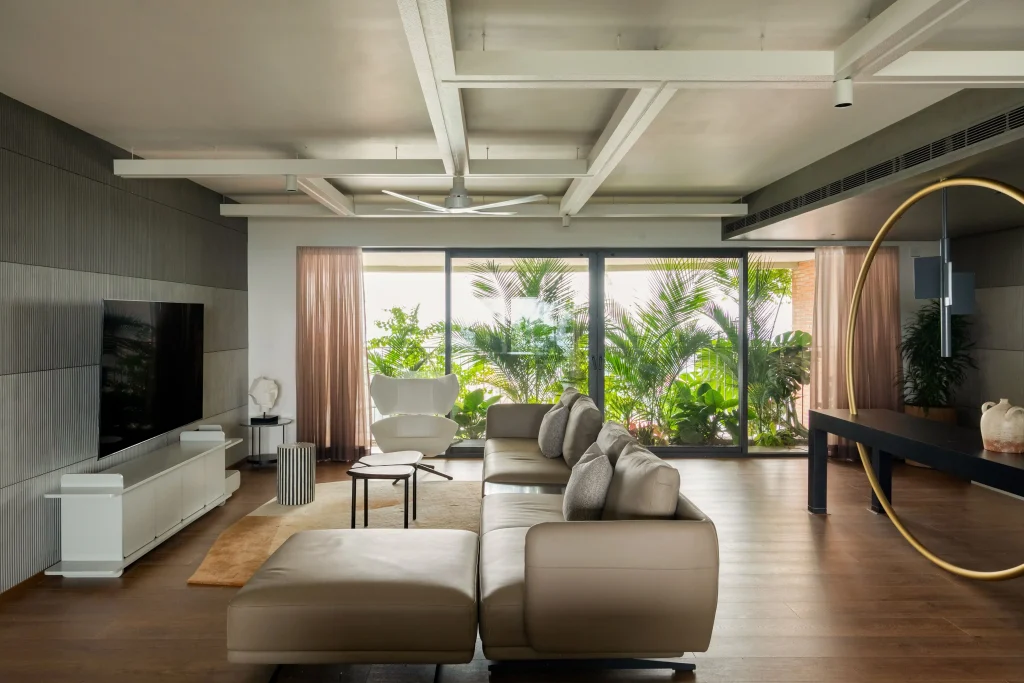
Finding the right furniture begins with reality. Start with a trusty tape measure, carefully mapping out your room’s dimensions, the widths of your doorways, and your daily walking paths to ensure every new piece fits perfectly and the room still breathes.
Let the room’s primary purpose guide your layout. If the space is dedicated to movie nights, orient your seating towards clear, comfortable sightlines to the screen. If it is a hub for socialising, angle your sofas and armchairs towards one another so everyone feels instantly included. While an appealing style might catch your eye, comfort and durability are what you will live with day in and day out. Choose upholstery that forgives real life. If you have children or pets, performance or stain-resistant fabrics are a gift to your future self. Always test the seat depth and cushion firmness before committing. Equally important, mix heights and shapes to give the room a natural visual rhythm, keeping a close eye on proportion so your furniture feels perfectly at home, neither lost in the space nor crowding it.
Bringing these ideas to life is easier with the right partner. Ahanas can guide you from layout and lighting to the final finishing touches, creating a living room that feels welcoming, balanced, and unmistakably yours.