
Where Light Becomes Architecture, Kerala’s Timeless Dialogue with the Sun
Long before air conditioning units hummed into existence, Kerala’s builders had already solved the problem of tropical comfort with geometry. Sloping tiled roofs that shrugged off monsoon rain. Verandahs that softened the noon glare into something liveable. Courtyards open to the sky, pulling breeze through the heart of a home like a held breath finally released.
To build a home in Kerala is to enter into a negotiation with the climate, its relentless humidity, its generous monsoons, its sun that never really goes on leave. The architects who understand this, many of them among the most sought-after architects in Kerala, don’t fight the weather. They create around it. Every jaali screen, clerestory window and shaded threshold is an argument for working with nature instead of against it. The result is houses that breathe, cool themselves and stay luminous.
It’s this philosophy, treating light and air as design principles, that shapes the two homes we’re about to walk through. It is also the philosophy that continues to define some of the best architecture firms in Kerala.
Collage in the Sky, An Apartment of Light and Memory
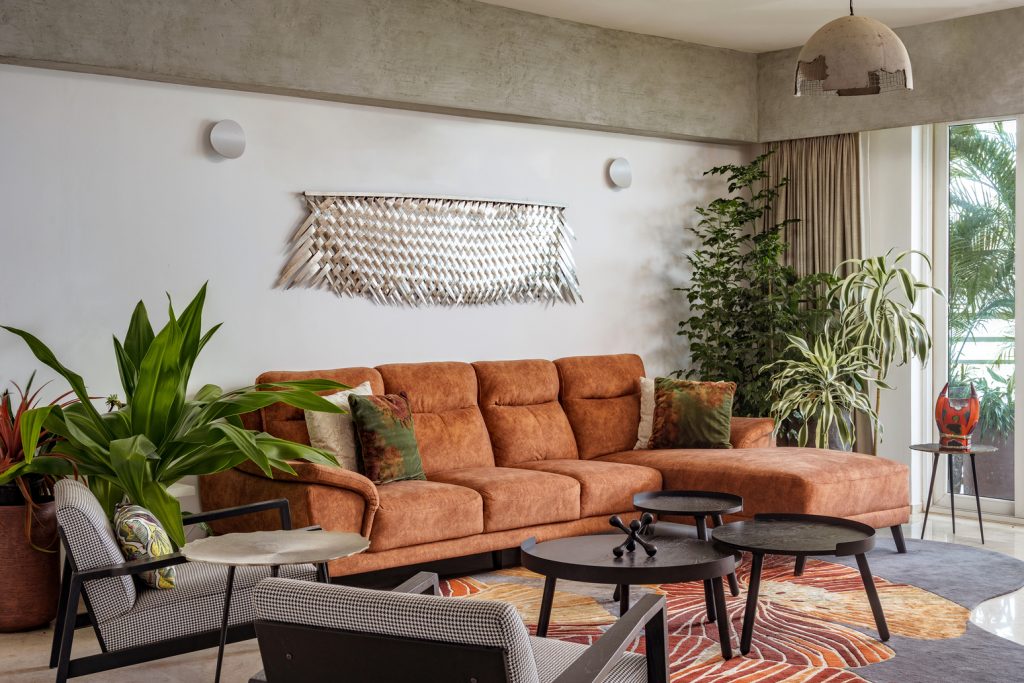
Actor Parvathy Thiruvothu arrived with a question. What does home mean to someone whose life is built on impermanence? Between roles, between characters, between the intense emotional labour of her craft and the abrupt goodbyes that follow, she needed a home that could do something no set ever could. Hold her still.
The result, Collage in the Sky, resists the instinct towards polished permanence. Instead, it reads as a living, breathing archive, a home shaped as much by memory as by material. But its real triumph lies in how it handles light and air, treating both as emotional architecture.
A Balcony Transformed into a Refuge
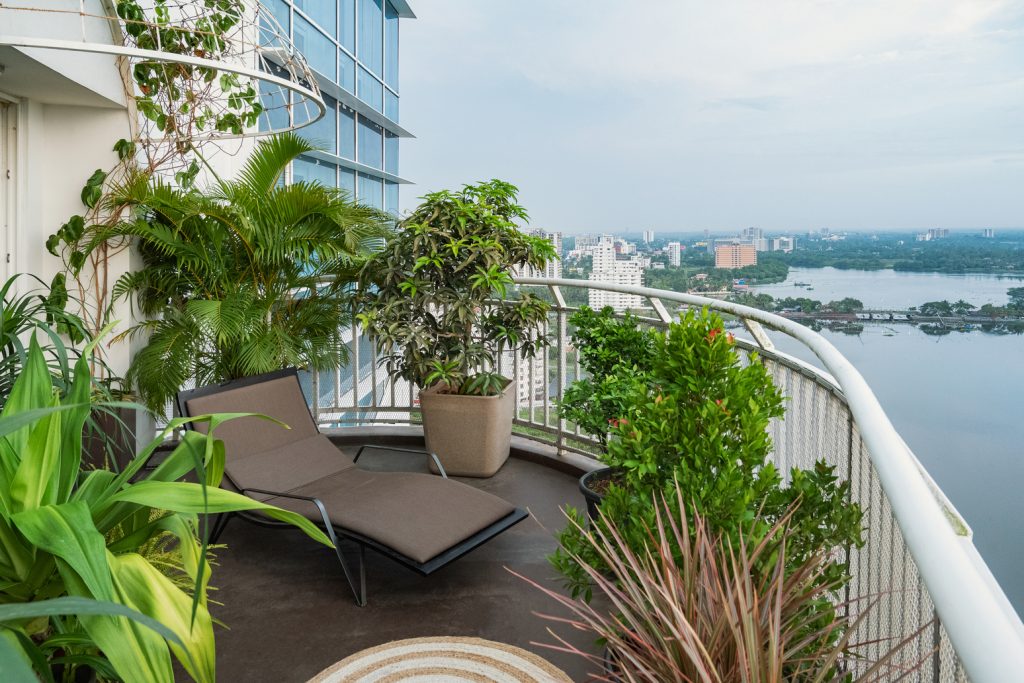
Nowhere is this clearer than in the home’s main balcony, reimagined not as a transitional space but as a literal refuge in the clouds. Rather than a token strip of greenery, the design commits fully. More than 35 plants line the space, along with a fully fruiting mango tree and citrus plants, an audacious gesture in a high-rise apartment. Stepping outside becomes less a change of scene and more a meditative ritual, the kind of daily reset that dense, ephemeral urban living rarely allows for.
For someone as recognisable as Parvathy, an open, light-filled home could easily have become a liability. The design solves this with what can only be described as a magnetic field of privacy, a careful architectural veil that blocks the external gaze while still pulling the landscape and its natural light inward. It’s a very Kerala paradox, staying open to the sky while remaining shielded from the street.
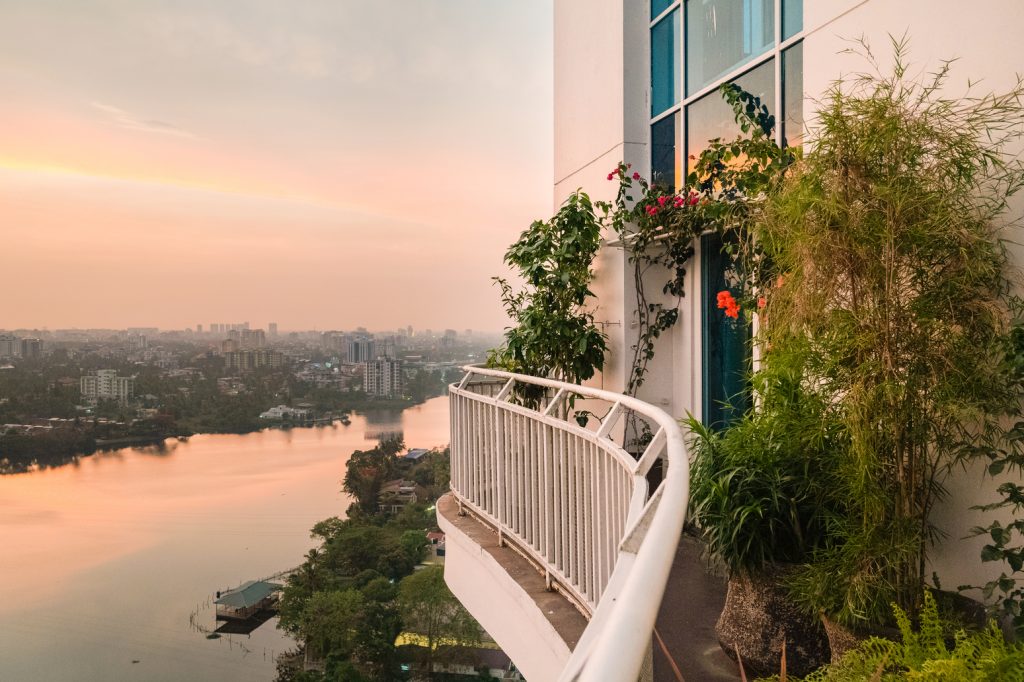
In Collage in the Sky, natural light functions almost like the lead character, present in every room, catching the morning sun on the bed and casting leaf shadows across the library floor. It’s proof that even high-rise apartment living can honour Kerala’s ground-level wisdom. Let the light in, and let it do some of the emotional work.
The Dancing Courtyard, When the View Comes From Within.
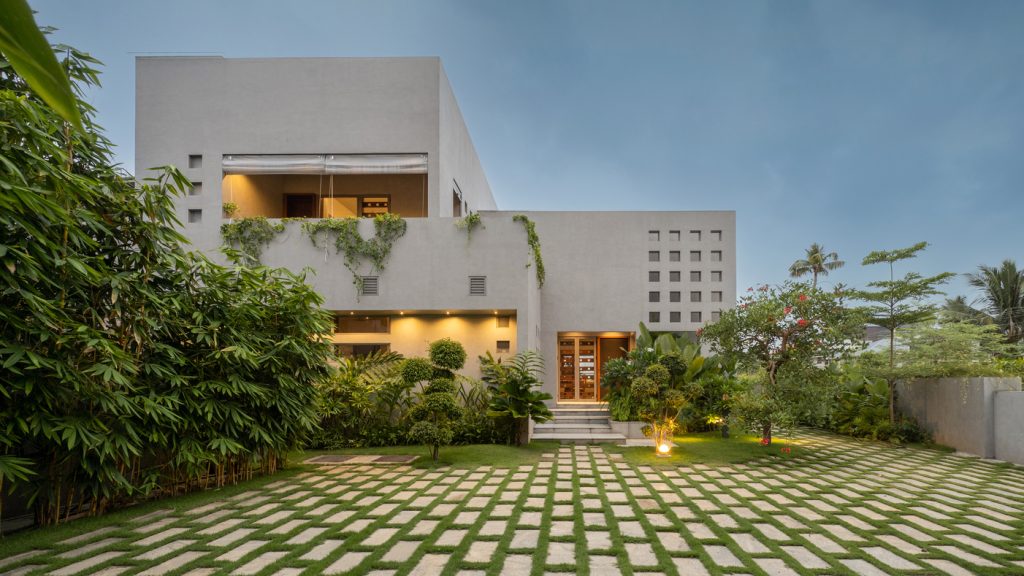
Not every plot gets a horizon. Nestled deep within a dense housing society, this home’s generous 50 to 60 cent plot offered space in abundance but visibility in short supply, hemmed in on all sides with little meaningful connection to the world outside. Most designs would treat this as a limitation to disguise. Here, it became the entire premise.
Rather than fighting the site’s introversion, the design leaned all the way in, turning the home’s gaze inward and building its own private universe of light, raw material and movement. The result, aptly named The Dancing Courtyard, is one of the more compelling arguments in recent Kerala architecture for why looking inward can be more luxurious than looking out.
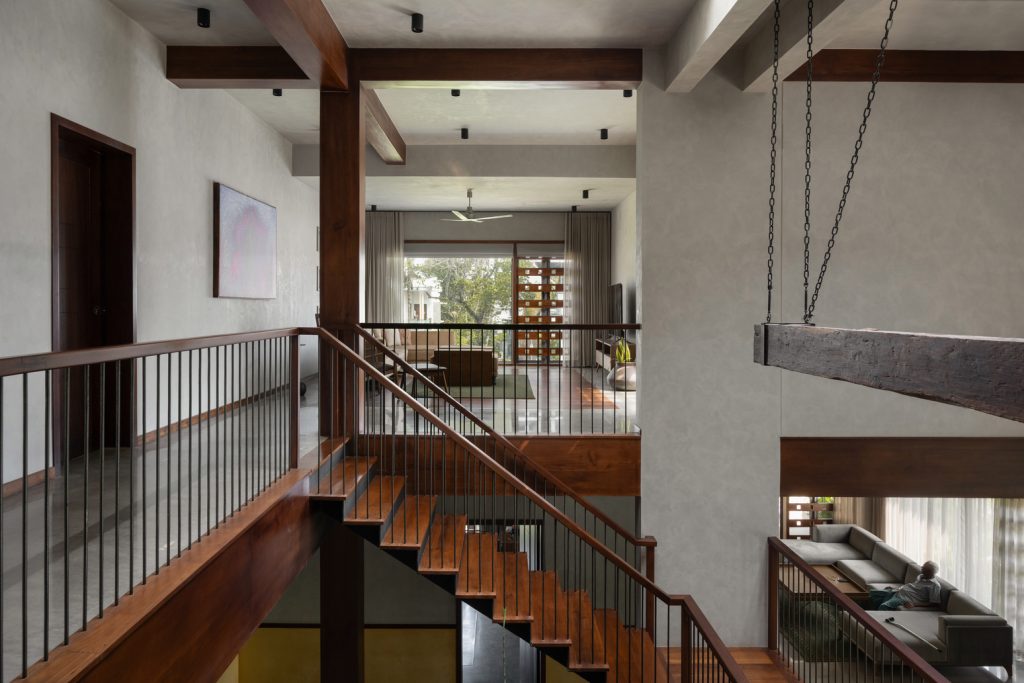
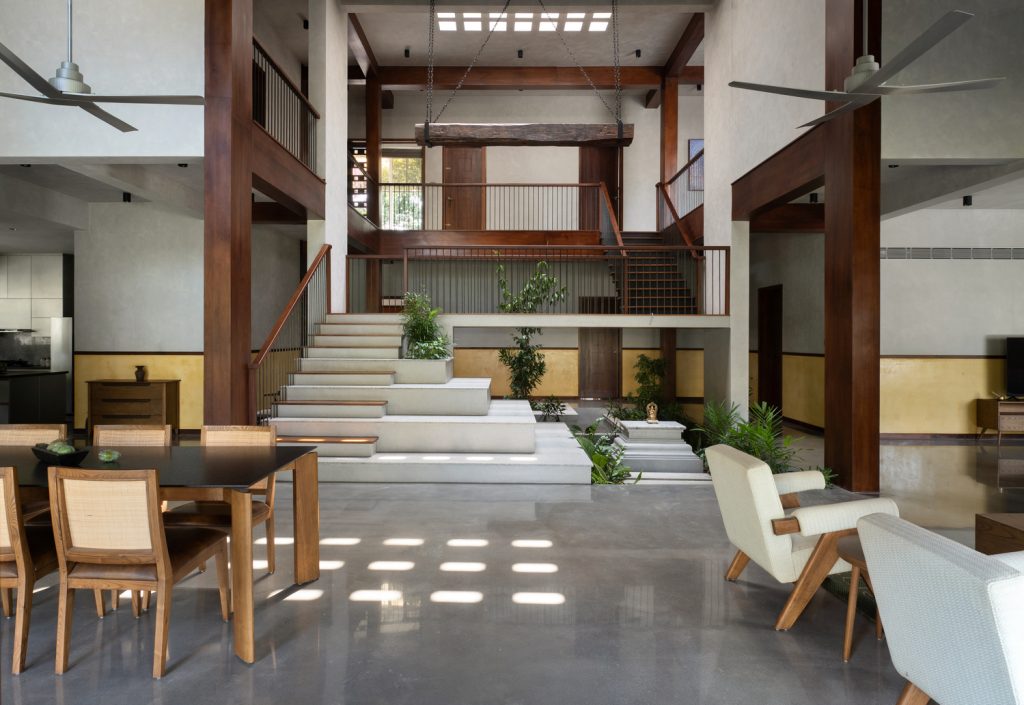
Where lesser designs might have settled for a decorative green void, this courtyard was crafted as the literal nucleus of family life. The main staircase is integrated directly into it, turning a functional necessity into a daily ritual of passage. Radiating outwards from this core are a pooja area, intimate personal nooks and inviting sitting zones, while a private passage wraps around the perimeter, connecting three bedrooms without ever severing
them from the home’s lively centre. It’s an object lesson in how open-plan living, done well, doesn’t just admit light. It strengthens togetherness.
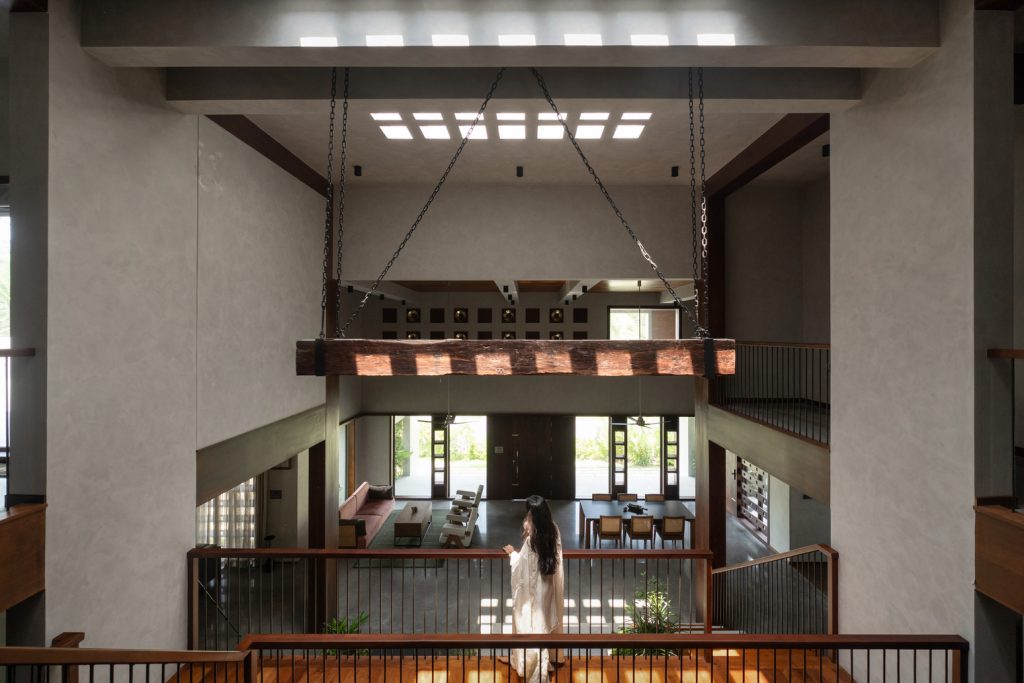
The home’s namesake feature comes from above. Small, square skylights are punched into the roof, engineered to pour sunlight directly into the heart of the home. As the sun arcs overhead through the day, these cut-outs cast shifting geometric shadows across the earthy floors and raw concrete walls, a literal dance of light and shadow that changes the mood of the interior from dawn to dusk. No two hours in this home look quite the same, and that impermanence is precisely the point. It’s daylight treated as a design material in its own right, as deliberate as any tile or timber beam.
Materials That Balance Raw Strength and Warmth
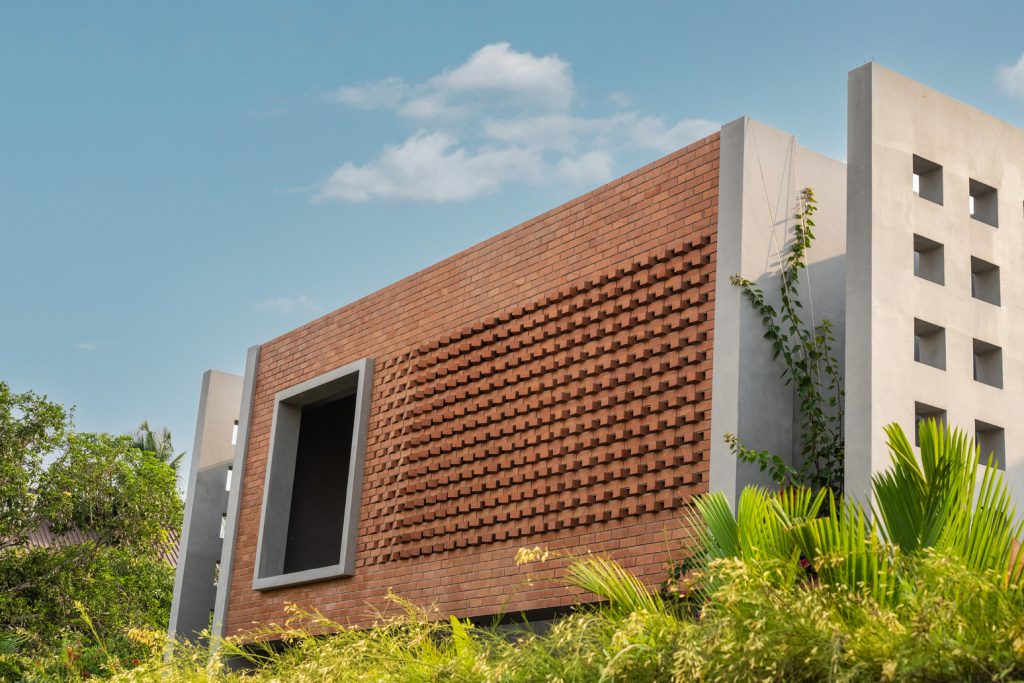
Materially, the home balances raw concrete and perforated brick jaali walls on the outside with warm heirloom timber and red oxide floors within, creating a deliberate tension between stark modern geometry and tactile Indian warmth. The perforated jaali walls do double duty, allowing air and dappled light to filter through even where privacy demands solid boundaries, a quintessentially Kerala solution to a very contemporary urban problem. It is this thoughtful integration of architecture and interiors that sets apart the finest home interior designers in Kerala.
Two Homes, One Conviction
Though worlds apart, Collage in the Sky and The Dancing Courtyard couldn’t feel more different, one soaring above the city and drenched in open air, the other folding inward to build a private world untouched by its surroundings. And yet both are built on the same conviction that has guided Kerala’s architecture for generations, that light and air are the starting point of good architecture, not the finishing touch.
In a state where the sun is a constant collaborator and the monsoon a recurring negotiation, these homes, shaped by some of the finest architecture firms in Kerala and interior design firms in Kerala, remind us that comfort was never really about keeping nature out. It was always about knowing exactly how much of it to let in.